What is liability insurance?
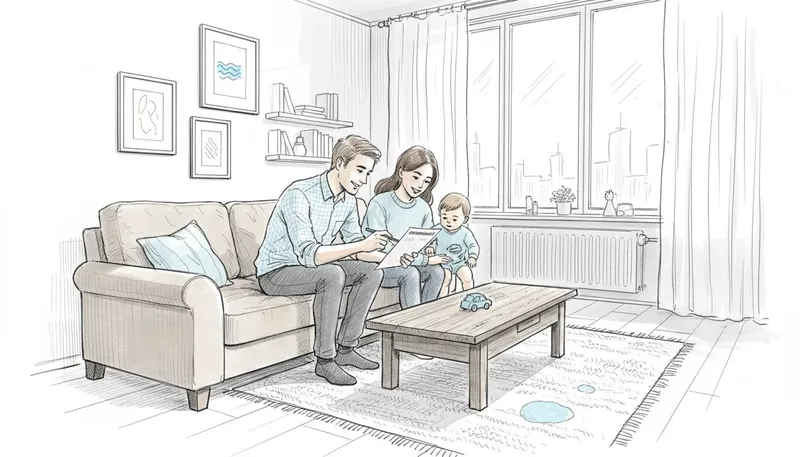
Liability insurance protects you against compensation claims that others bring against you. If you cause damage to someone, the insurer steps in: it pays justified claims and defends you against unjustified ones, in court if necessary. That is exactly what makes it so important -- in Germany you are liable for the damage you cause without any financial cap.
The insurance covers three types of damage:
- Personal injury: if you injure someone, for example in a cycling accident
- Property damage: if you damage someone else's property, for example a friend's smartphone
- Financial loss: financial disadvantages that result from a personal injury or property damage
Important for newcomers: in German this insurance is called Haftpflichtversicherung (or Privathaftpflicht for the personal version). Damage to your own property is not covered. If you drop your own phone, liability insurance does not pay.
Good to know:
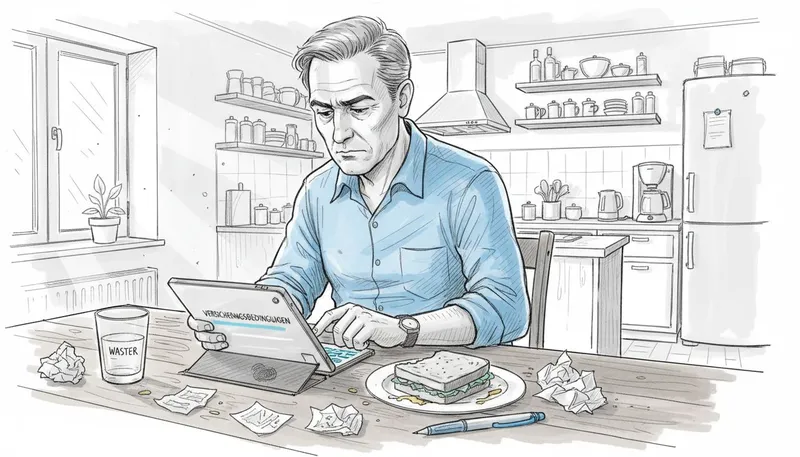
A personal liability policy usually covers the whole household -- including your children and often your partner too. Car liability insurance (KFZ-Haftpflicht) is separate and legally mandatory. More in our guide on car liability insurance.
Do you need liability insurance in Germany?
It is not compulsory. Personal liability insurance is not legally required in Germany. Even so, it is one of the most widely held insurance policies in the country: according to the German Insurance Association (GDV), more than 80 percent of households have one. Stiftung Warentest and Finanztip recommend it to virtually everyone.
The reason is in the law. Under Section 823 of the German Civil Code (BGB), anyone who negligently causes damage to another person must compensate them in full. There is no upper limit on this liability. A single serious personal injury can cost you your entire assets and a portion of your future income. Personal liability insurance takes exactly that risk off your shoulders.
| Typical scenario | Why liability insurance matters |
|---|---|
| You damage someone else's property | Repair or replacement can quickly run to several thousand euros |
| You injure someone (e.g. while cycling) | Treatment and follow-up costs can become very high |
| Serious injury with lasting consequences | With care costs and loss of earnings, claims can reach millions |
| Someone makes an unjustified claim against you | The insurer examines the claim and defends you if needed |
Most liability claims are small and in the low three-figure range. Costs rise sharply with personal injuries -- which is exactly why you need a sufficiently high coverage sum. Certain professions such as doctors, lawyers or freelancers also need a separate professional liability policy, because personal liability does not cover occupational risks.
What types of liability insurance exist?
The word "Haftpflicht" covers several different policies, each addressing different risks. This often causes confusion among newcomers. The table below shows the most important types:
| Type | Mandatory? |
|---|---|
| Privathaftpflicht (personal) | No |
| Tierhalterhaftpflicht (pet owners) | Mandatory for dogs in many states |
| Haus-/Grundbesitzerhaftpflicht (property) | No |
| KFZ-Haftpflicht (car) | Yes |
Personal liability covers everyone living in your household, including minor children and often adult children in initial vocational training. If you have a dog, a separate pet-owner liability policy is legally required in many German states. If you own a rented property, you need property owner liability insurance for it -- and to protect the building itself against fire, storm and water damage, see our German-language guide on building insurance for owners.
Good to know:
Many personal liability plans already include small animals such as cats or rabbits. Check what you actually need before signing up, so you do not pay twice for overlapping cover.
Common myths about liability insurance
Many policyholders believe their liability insurance will pay in every situation. That is not the case. These four myths often lead to unpleasant surprises at claim time:
Myth 1: Liability insurance covers your own damage
Wrong. If you damage your own smartphone or furniture, liability insurance pays nothing. Only damage to third parties is covered.
Myth 2: Favour damage is always included
If you help friends move and damage their furniture, cover often does not apply. Favour damage (Gefälligkeitsschäden) is only included when the plan explicitly says so.
Myth 3: Car damage is handled through personal liability
No. Damage involving a car is covered exclusively by car liability insurance (KFZ-Haftpflicht), which is legally mandatory and entirely separate from personal liability.
Myth 4: Intentional damage is covered
Deliberately caused damage is never reimbursed. Occupational risks also require a separate professional liability policy.
Find a suitable liability insurance plan
Now that you understand how liability insurance works, compare plans by price and coverage at your own pace. The comparison is free and non-binding.
Compare liability insuranceCoverage sum and cost
The coverage sum (Deckungssumme) is the maximum amount the insurer will pay in a claim. It is the most important feature of a good plan. Stiftung Warentest and Finanztip recommend at least 10 million euros per injured person. Many good plans today offer 50 million euros as a blanket sum, sometimes even 100 million. The premium difference for a higher sum is small, but the protection is substantially better.
Useful extras to look for in a good plan:
- Loss-of-claims coverage (Forderungsausfalldeckung): pays when someone damages you but is not insured themselves
- Key loss (Schlüsselverlust): covers the cost of replacing a lock if you lose a key
- Children not legally liable (deliktunfaehige Kinder): protection if damage is caused by children under 7 (Section 828 BGB)
- Favour damage (Gefälligkeitsschäden): covers damage when you help others without charge
- Rented property damage (Mietsachschäden): covers damage to a rented flat or holiday home
The good news on cost: personal liability insurance is affordable. According to Stiftung Warentest and Finanztip (as of 2025/2026), good plans are available from around EUR 20 to 35 per year for singles. Family plans, which cover everyone in the household, typically run between EUR 60 and 100 per year. In other words, you pay just a few euros per month for cover that can protect you from financial ruin.
One further detail is the deductible (Selbstbeteiligung) -- the share of each claim you pay yourself. Opinions differ here: Stiftung Warentest considers plans with no deductible ideal; Finanztip accepts up to about EUR 150 as a way to lower the premium. Both are reasonable -- choose based on your budget.
Good to know:
If you already have an older policy, check its coverage sum. Older contracts often fall below today's recommended level. Switching frequently brings better protection at a similar or lower price.
How to compare plans effectively
An online comparison lets you see the differences across hundreds of plans in just a few minutes. Here is a reliable approach:
| Criterion | What to look for |
|---|---|
| Coverage sum | At least 10 million EUR, ideally 50 million |
| Annual premium | Assess price and coverage together |
| Deductible | EUR 0 or at most EUR 150 |
| Extras | Loss-of-claims, key loss, rented property damage |
| Service | Good customer ratings and fast claim handling |
A comparison is also worthwhile if you are already insured: plans change over time, and switching often brings more coverage for the same money. The insurance comparison lets you review several policies at once.
What to do when a claim happens
When damage occurs, acting quickly and correctly counts. You must report the damage without undue delay. That is what Section 30 of the Insurance Contract Act (VVG) requires. There is no fixed statutory reporting window of a specific number of days -- the exact requirements are in your policy terms. When in doubt: report sooner rather than later.
Step by step when a liability claim occurs:
After you report the claim, your insurer checks whether you are actually liable and whether the damage is covered. Justified claims are settled directly with the injured party; unjustified ones are defended. Keep all documents until settlement is complete.
Our recommendation for your liability cover
You now know the basics, the types and the key selection criteria. The next step is a comparison so you can find a plan that fits your situation.
With the liability insurance comparison you can find a suitable plan in minutes. The insurance comparison lets you check other insurance types at the same time. The comparison is free, non-binding and GDPR-compliant.
Compare now