Last updated: 14 July 2026 · meinetarife24 Editorial Team
Key takeaways
- You cut your gas bill in two ways: use less and pick the cheaper tariff.
- Turning the heating down by just 1°C saves about 6 percent of heating energy (Verbraucherzentrale).
- The biggest single lever is switching tariffs: up to around €900 a year for a house leaving the default supply (Finanztip, October 2025).
- In the default supply you can cancel with just two weeks notice (§ 20 GasGVV).
Saving on gas sounds like freezing through winter. It does not have to. Most households in Germany pay a few hundred euros too much every year, simply because they skip two easy steps: cutting their consumption with a handful of small changes, and checking their tariff once a year. This guide walks you through both, with real numbers from trusted sources like the Verbraucherzentrale, co2online and the BDEW gas price analysis. Whether you rent a flat or heat a house.
Key facts at a glance
| Measure | Effect | Source |
|---|---|---|
| Heat 1°C lower | about 6% less heating energy | Verbraucherzentrale |
| Hydraulic balancing | about 10%, roughly €190/yr | co2online |
| Bleed the radiators | about €60/yr in a house | co2online |
| Switch tariff | up to ~€900/yr (house, from default supply) | Finanztip, 10/2025 |
| Cancel default supply | just 2 weeks notice | § 20 GasGVV |
What does gas cost in 2026?
Before you save, look at the numbers. The average household gas price is 11.10 cents per kilowatt-hour, according to the BDEW gas price analysis (January 2026). That is well below the 2022 energy-crisis peak, but still a real chunk of the household budget.
What it means in euros depends on how you live. A flat of about 70 square metres uses roughly 7,980 kWh a year (co2online/Heizspiegel), so around €885. A single-family house is closer to 20,000 kWh, about €2,220 a year (BDEW). Insulation and heating habits push that up or down a lot.
Base fee and unit price: two parts
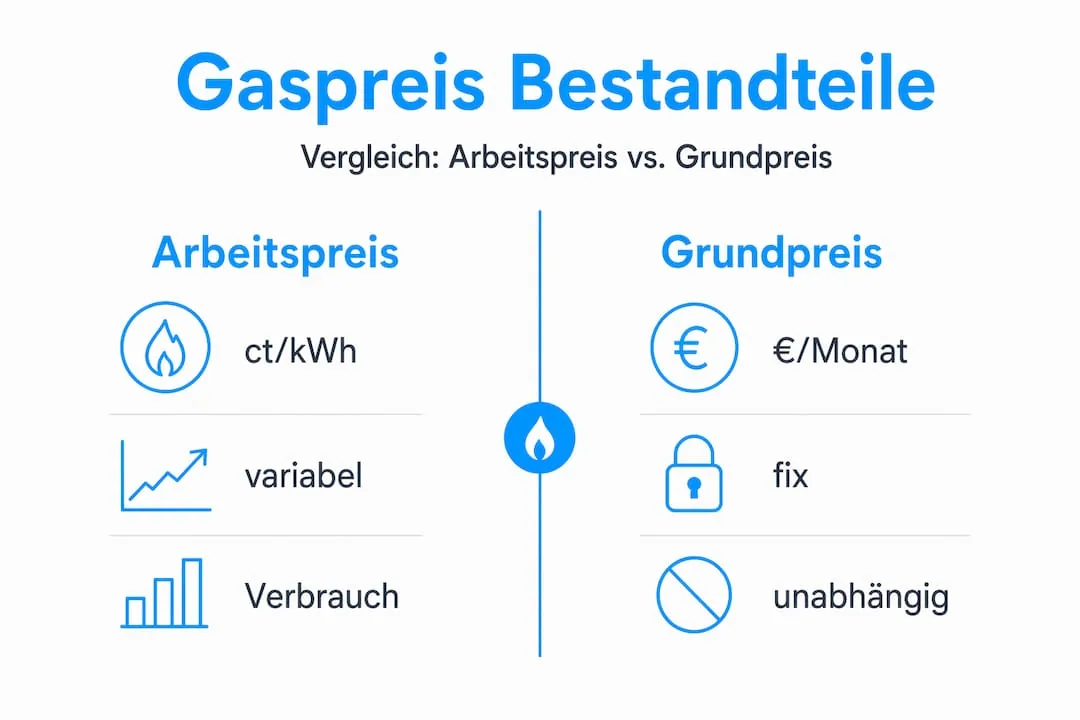
Your gas bill has two parts. The Grundpreis (base fee) is a fixed monthly charge that does not depend on usage. The Arbeitspreis (unit price) is charged per kilowatt-hour and is the bigger block for most households. Looking only at the unit price is a classic mistake: a low unit price with a high base fee can work out more expensive overall.
What makes up the price
| Component | Share (approx.) | Good to know |
|---|---|---|
| Procurement & sales | about half | The part a tariff switch targets |
| Network fees | about a fifth | Set by the grid operator, rising in 2026 |
| Taxes, levies, CO₂ | about a quarter | VAT back to 19% since 01.04.2024; 2026 CO₂ price in a €55–65/t range |
One small relief in 2026: the gas storage levy (Gasspeicherumlage) ended on 1 January 2026 (Trading Hub Europe). But the biggest part of your bill is still in your hands, through your usage and your tariff.
Cut your heating: the tips that work
Around 80 percent of household gas goes into heating and hot water. That is exactly where the biggest savings sit, often without spending a cent. The measures below are sorted by impact.
Turn the temperature down one degree
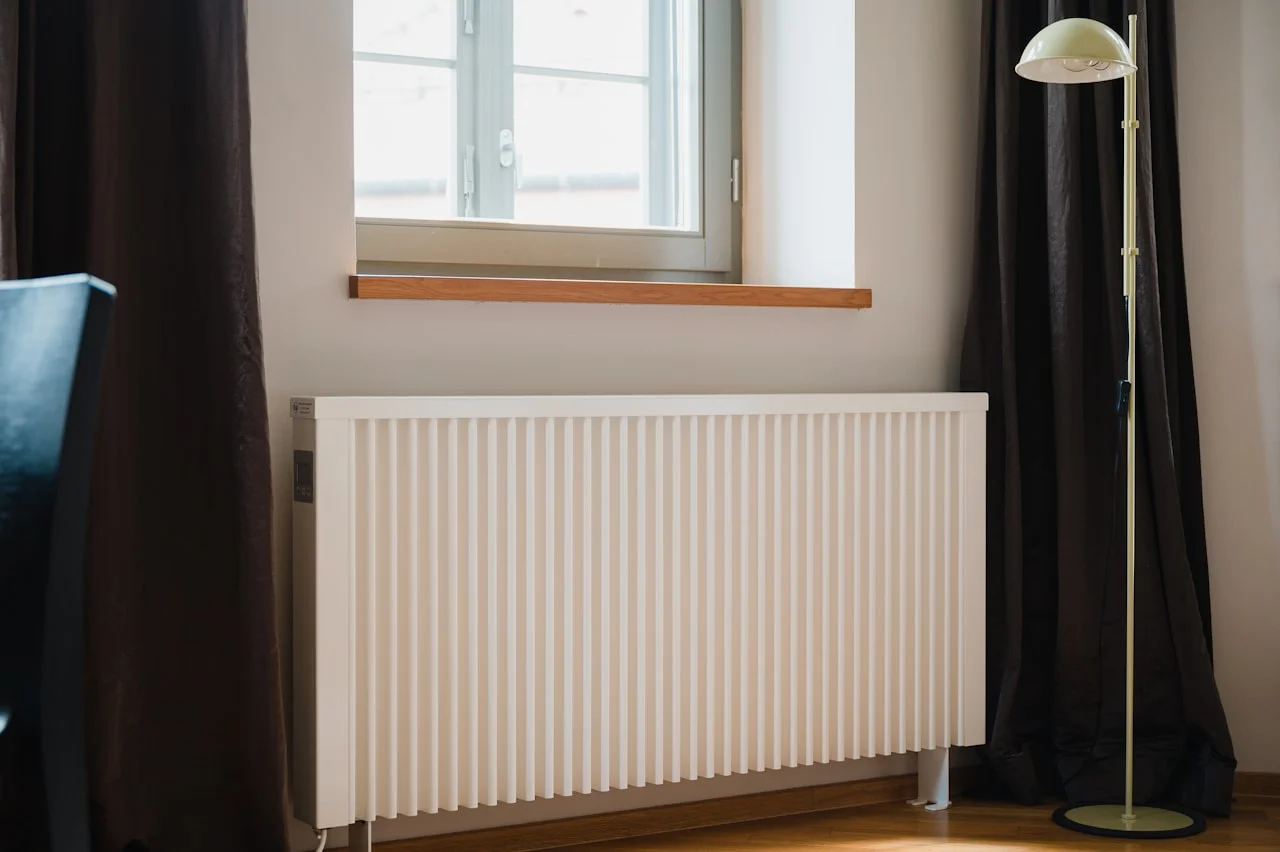
This is the simplest lever of all. Just one degree less cuts heating energy by about 6 percent, as the Verbraucherzentrale calculates. The effect is a bit smaller in well-insulated new builds and often larger in older buildings. You do not have to freeze: the point is not to heat every room to 23 degrees.
| Room | Recommended temperature |
|---|---|
| Living room | around 20°C |
| Bedroom | about 17–18°C |
| Bathroom | about 22–23°C |
| Rarely used rooms | not below 16°C (mould risk) |
These values come from the Verbraucherzentrale. One rule matters: never go permanently below 16 degrees, or you risk damp walls and mould.
Air the right way: burst, do not tilt
A permanently tilted window is the most expensive airing mistake. It cools the walls around the window without really exchanging the air. Better: open the windows fully for a few minutes several times a day, ideally across the flat for a draught. The damp air is gone quickly while the walls stay warm. Turn the thermostats down while you air.
Optimise the heating
This is where owners and committed renters find real money. The most effective single step is a hydraulic balancing (hydraulischer Abgleich): the heating is adjusted so every radiator gets exactly the heat it needs. co2online puts the saving at about 10 percent, roughly €190 a year on average, and up to 15 percent in some homes.
- Bleed the radiators: if a radiator gurgles, there is air in the system. Bleeding it saves about €60 a year in a house (co2online), and you can do it yourself.
- Programmable or smart thermostat: it lowers the temperature automatically when nobody is home or at night. co2online sees up to 10 percent savings versus an analogue thermostat.
- Keep radiators clear: a sofa or curtain in front of a radiator traps the heat. A free-standing radiator releases it into the room.
Watch your hot water
Hot water is the second-biggest gas user. But do not set the tank temperature too low: Stiftung Warentest and the Verbraucherzentrale recommend at least 60 degrees so no legionella can form. Save on usage instead, with a water-saving shower head and shorter showers.
Tip for renters
Even without touching the boiler you get a lot: one degree less, proper airing, clear radiators and a night setback. You can suggest the hydraulic balancing to your landlord, it lowers the running costs for everyone.
Switch tariff: the biggest lever
Working only on consumption leaves the biggest item on the table. Finanztip calculates (October 2025) that a single-family house moving from the default supply to a cheap tariff can save up to around €900 a year. That is a maximum for a high-use house; depending on your usage and current tariff the saving is smaller. Even so, many households stay in the more expensive default supply, the Bundesnetzagentur reports.
Six steps to a cheaper tariff
- Find your annual usage: take your last annual statement and note the kWh used plus your current unit price and base fee.
- Compare tariffs: enter usage, postcode and current terms into a comparison tool. With meinetarife24 that is free and takes a few minutes.
- Calculate the total annual cost: do not compare unit prices alone. Add base fee and unit price together, or a seemingly cheap tariff will fool you.
- Check price guarantee and term: a 12 to 24 month price guarantee protects you from increases. Watch the minimum term and auto-renewal.
- Submit the cancellation: cancel in text form within the notice period. In the gas default supply (Grundversorgung) it is just two weeks under § 20 GasGVV.
- Confirm the switch and check the bonus: note the switch date and read the meter yourself on the switch day — keep a photo so no one bills you for an estimated consumption. Verify after three months that any new-customer bonus was credited.
Default supply or special tariff?
| Feature | Default supply | Special tariff |
|---|---|---|
| Price | usually higher | often clearly cheaper |
| Notice period | 2 weeks (§ 20 GasGVV) | depends on term and renewal |
| Price guarantee | none | often 12 to 24 months |
| Special cancellation on price rise | yes (§ 5 GasGVV) | yes (§ 41 EnWG) |
| Best for | a short bridge period | long-term saving |
The default supply is a safety net, not a long-term tariff. Staying in it for more than a few months usually means overpaying. And if your provider raises the price, your special right of termination kicks in, so you can leave even a running fixed-term contract.
Compare fairly
Annual cost = (unit price × annual kWh) + (base fee × 12)
Only this total makes two tariffs truly comparable.
Ready to compare?
Enter your postcode and annual usage for matching gas offers in seconds.
Stay on top of your usage
Saving once is not enough. People who keep paying less make checking a habit, and it costs only a few minutes a year.
- Note your meter reading: read your gas meter regularly, ideally monthly. You spot a rising consumption early, and the provider cannot estimate your reading too high.
- Actually read the annual statement: many file it away unread. Yet it shows whether your monthly instalment fits, how your usage has changed and whether your tariff is still competitive.
- Adjust the instalment: if you heat more efficiently, ask to lower the monthly instalment instead of giving the provider an interest-free credit.
- Compare once a year: set a reminder. The gas comparison shows you in minutes whether a switch is worth it.
Our verdict
Saving on gas is not one big project, it is a handful of habits. Turn the heating down a degree, air the right way and have the system optimised once, and your consumption drops noticeably without anyone freezing. The biggest jump, though, comes from the tariff: leave the default supply and compare once a year, and you rarely overpay.
Our advice for newcomers to Germany: first check which tariff you are on. If you are still in your local provider's default supply (Grundversorgung), switching is almost always the fastest route to a lower bill, and thanks to the two-week notice period you stay flexible.
— meinetarife24 Editorial Team
Compare now and save for the long run
You have read the tips, now comes the concrete step. With the free gas comparison from meinetarife24 you check in minutes whether your current tariff is still competitive. You can also compare electricity in the same place.