Solar Panel Comparison Germany 2026
Buying a PV system for a detached house, explained for newcomers
Direct answer: A 5–10 kWp photovoltaic system for a German detached house typically costs EUR 14,000 to 20,000 including battery storage in 2026. The EEG feed-in tariff is 12.34 ct/kWh for full feed-in and 7.78 ct/kWh for surplus feed-in (up to 10 kWp, valid 1 February to 31 July 2026, source: Bundesnetzagentur). Delivery and storage for residential buildings are zero-rated for VAT (section 12(3) UStG), and earnings stay income-tax-free for most homeowners (section 3 no. 72 EStG).
Key Takeaways
- Price 2026: EUR 1,000–2,000 per kWp without storage, EUR 14,000–20,000 with storage for a typical detached house (Finanztip).
- EEG tariff 2026: 12.34 ct/kWh full vs. 7.78 ct/kWh surplus (up to 10 kWp), locked for 20 years (Bundesnetzagentur).
- Tax: 0% VAT on system and storage, income-tax exemption for residential PV (German Federal Ministry of Finance, 2023).
- Loan: KfW 270 finances up to 100% of system costs. Balcony solar is not eligible.
- Tenants: Balcony solar (Balkonkraftwerk) needs no grid-operator notification since May 2024, but MaStR registration is still mandatory. Limits: 800 VA inverter, 2,000 W modules.
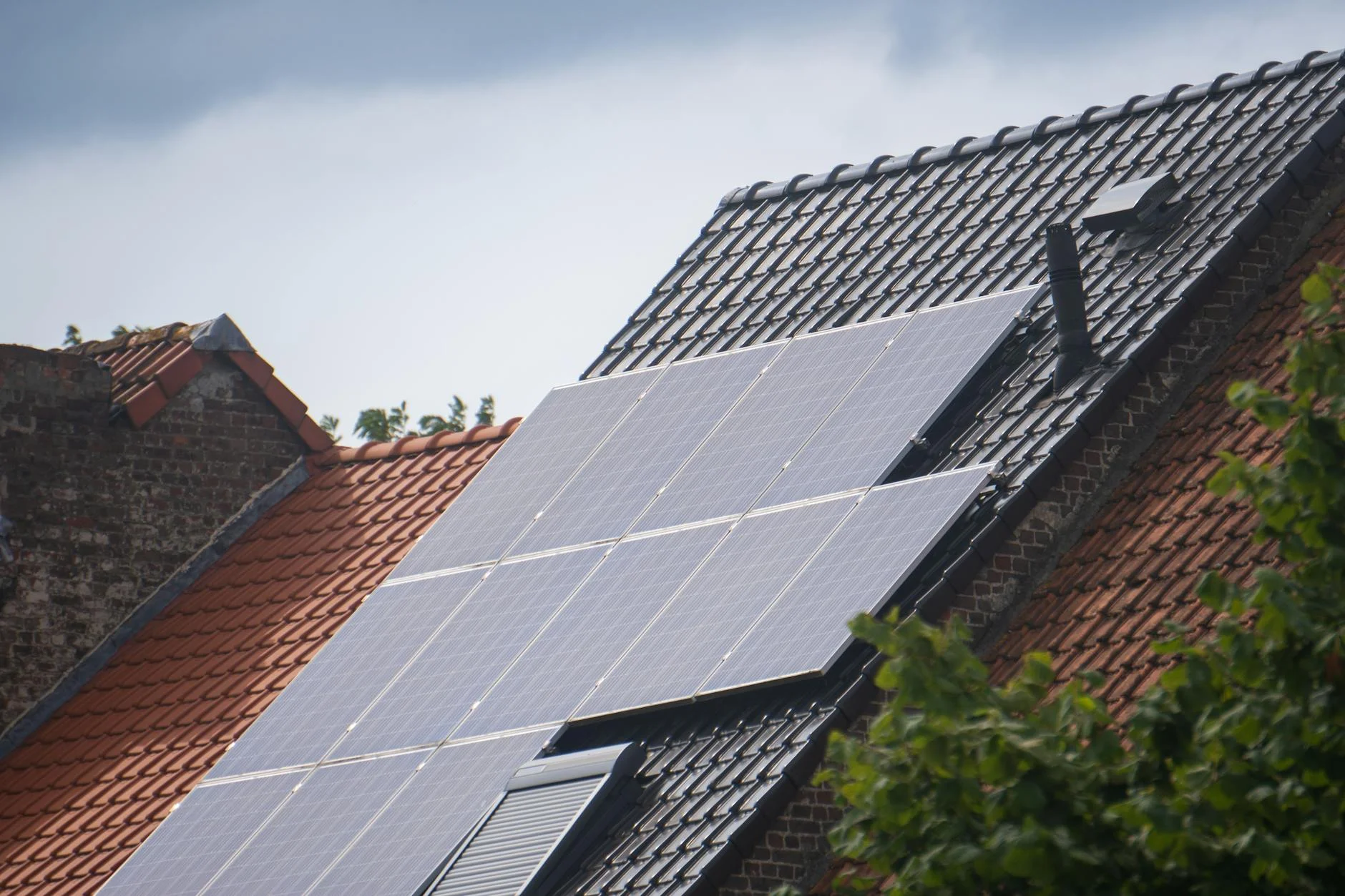
Key German Terms You Will See on Quotes
Quotes, official letters and the BNetzA portal are all in German. These eight terms come up again and again.
Photovoltaik (PV)
Solar power system
Balkonkraftwerk
Balcony solar system
Einspeisevergütung
Feed-in tariff
Eigenverbrauch
Self-consumption
Stromspeicher
Battery storage
kWp
Kilowatt peak (system capacity)
Wechselrichter
Inverter
MaStR
Market data register (BNetzA)
Tip for tenants and newcomers
Renting in Germany? A Balkonkraftwerk (balcony solar) has been allowed without grid-operator notification since Solar Package I (in force 16 May 2024). Limits are 800 VA inverter capacity and up to 2,000 W modules. Registration in the Marktstammdatenregister (MaStR) at the Federal Network Agency is still mandatory, but takes under ten minutes since April 2024. For larger systems from 4 kWp upwards, KfW loan 270 is worth a look.
Free
No obligation
Independent
Vetted providers
20 years
EEG tariff locked
0% VAT
Since 2023, sec. 12 UStG
Solar calculator: your personal quote in 3 minutes
Enter your postcode, roof area and yearly consumption. Receive non-binding quotes from regional and nationwide installers.
Note: Inputs are sent over SSL. You get up to 5 free, non-binding quotes from installers in our partner network in your region.
What does a PV system actually cost in 2026?
Prices dropped noticeably in 2026. Finanztip puts the turnkey price for a detached house including battery storage at EUR 14,000 to 20,000. Without storage you land at EUR 1,000 to 2,000 per kWp. Finanztip says do not pay more than EUR 1,600 per kWp, otherwise the price-to-performance ratio breaks.
For the battery itself the rule is at most EUR 600 per kWh. A 5 kWh storage system should cost no more than EUR 3,000, a 10 kWh unit no more than EUR 6,000. Anything above that warrants a second look at the quote.
| System size | Typical use | Without storage | With storage |
|---|---|---|---|
| 4–6 kWp | 2–4 people, no heat pump | EUR 5,000–10,000 | EUR 10,000–15,000 |
| 7–10 kWp | House with EV or heat pump | EUR 8,000–16,000 | EUR 14,000–20,000 |
| 10–15 kWp | Full roof coverage | EUR 12,000–24,000 | EUR 18,000–28,000 |
Benchmarks for 2026. Sources: Finanztip Photovoltaik guide, Verbraucherzentrale.
EEG feed-in tariff 2026: current BNetzA rates
How much your grid operator pays per kilowatt-hour fed into the grid depends on the commissioning date and the model. The Bundesnetzagentur (Federal Network Agency) sets the rates. They drop by 1% every six months and stay fixed for 20 years from commissioning.
| System size | Full feed-in | Surplus feed-in |
|---|---|---|
| up to 10 kWp | 12.34 ct/kWh | 7.78 ct/kWh |
| 10–40 kWp | 10.35 ct/kWh | 6.73 ct/kWh |
| 40–100 kWp | 10.35 ct/kWh | 5.50 ct/kWh |
Valid for commissioning dates from 1 February to 31 July 2026. Source: Bundesnetzagentur, EEG tariff archive.
Important for 2026: an EEG reform is planned for 2027: for new systems under 25 kWp, the fixed feed-in tariff is set to be replaced by mandatory direct marketing (a CfD model). This reform is still going through parliament and has not been adopted yet (as of June 2026). Anyone commissioning in 2026 locks in the current rates for 20 years.
Subsidies and tax 2026: money you keep
0% VAT (section 12(3) UStG)
Since 1 January 2023, delivery and installation of PV systems and battery storage on or near residential buildings carry a zero VAT rate. You pay no 19% VAT on an EUR 18,000 system (Federal Ministry of Finance, 27 February 2023).
Income-tax exemption (section 3 no. 72 EStG)
Earnings and withdrawals from PV systems on residential buildings stay income-tax-free. Limits: 30 kWp per residential unit (detached house), 15 kWp per residential unit (multi-family building), and 100 kWp per taxpayer in total (Federal Ministry of Finance, 17 July 2023).
KfW loan 270 "Renewable Energies Standard"
KfW finances up to 100% of eligible costs for roof, facade or ground-mounted systems, terms from 2 to 30 years. You apply before the purchase, through your house bank. Balcony solar systems are not eligible.
Regional grants
Bavaria, North Rhine-Westphalia, Baden-Württemberg and several municipal utilities run their own programmes, often tied to battery storage. Schemes change frequently; check current calls in your federal state before signing any contract.
Balcony solar after Solar Package I: the rules
Tenants and condo owners benefit from Solar Package I, which came into force on 16 May 2024. The main easings:
- Inverter capacity up to 800 VA, module power up to 2,000 W allowed.
- No notification of the grid operator required any more.
- Registration in the Marktstammdatenregister (MaStR) still mandatory, simplified since April 2024.
- Schuko plug allowed, Wieland socket no longer required (VDE recommendation remains).
- Tenants need landlord consent only in narrowly defined cases (privileged under section 554 BGB, section 20(2) WEG).
Four steps to the right solar system
Comparing costs nothing, but pays off almost every time. This order saves the most time in practice.
Know your usage
Pull last electricity bill, note annual kWh. About 1 kWp per 1,000 kWh.
Check your roof
South or south-west best, east-west works. Discuss shadow from chimney or trees with installer.
Compare quotes
At least three offers. Compare modules, inverter, storage and warranty length.
Lock subsidies
Before signing: apply for KfW 270, check regional grants and chimney sweep approval for storage.
Which provider type fits your situation?
Three main models exist. Which one pays off depends mostly on how much capital you have and whether you want to deal with tax and grant paperwork yourself.
Regional installer (traditional crafts firm)
Local firm, often decades on the market, single point of contact nearby. Prices typically EUR 1,000–1,600 per kWp including mounting. Service calls reach you fast.
National full-service provider
Nationwide brands with standardised packages, fixed module makes, often their own mounting crews. Prices around EUR 1,300–1,800 per kWp. Good for buyers who want one contact.
Rent or lease (PV without upfront capital)
No upfront cost, instead a fixed monthly rate over 15–20 years. Convenient, but more expensive long term.
When battery storage pays off in 2026
A storage unit costs EUR 600 per kWh or less. It lifts your self-consumption from a typical 30% (PV only) to 60–70%. Sounds great, but it is not the right call for every household.
Worth it if you are away during the day, have heavy evening usage, or run a heat pump or EV. Less worth it if your yearly consumption is below 3,500 kWh, or if you work from home and consume PV power directly.
Five mistakes buyers still make in 2026
- Getting only one quote. The cheapest and most expensive quotes often differ by 30%. Three comparable quotes are mandatory.
- Oversizing the battery. More than 1 kWh of storage per 1,000 kWh of annual usage rarely pays off. A 4,000 kWh household needs 4–5 kWh of storage, not 10.
- Trusting a flat "package price". Always have the module brand, inverter brand, storage model and warranty terms listed separately.
- Applying for KfW 270 after signing. Will not work. The application has to reach the house bank before the contract.
- Forgetting MaStR registration. Even balcony solar must be registered in the market data register. Missing the one-month deadline can mean fines up to EUR 50,000.
Frequently asked questions about solar panels in Germany 2026
How much does a solar panel system cost in Germany 2026?
What is the EEG feed-in tariff in Germany 2026?
Does solar still pay off in Germany in 2026?
What subsidies exist for photovoltaics in 2026?
Do I need a permit for a balcony solar system in Germany?
How big should my solar system be?
How long does a PV system last?
Sources
- Bundesnetzagentur, EEG support and rates.
- Bundesnetzagentur, Balcony solar systems.
- Federal Government, Solar Package I (in force 16 May 2024).
- Federal Ministry of Finance, Income-tax exemption section 3 no. 72 EStG.
- Federal Ministry of Finance, Zero VAT section 12(3) UStG.
- KfW, Renewable Energies Standard (270).
- Finanztip, Photovoltaik 2026.
- Verbraucherzentrale, What does a PV system cost.
- Stiftung Warentest, Solar panels topic.
Ready for your own system?
Compare free, non-binding quotes from regional and national installers. The form takes under three minutes.
Go to solar calculatorLast updated: 22 May 2026 · meinetarife24 Editorial Team · Verified against BNetzA, BMF and Finanztip sources.
Notes on subsidies and legislation are general information and not legal or tax advice. Binding statements come from your house bank, tax advisor or the relevant authority.