Types of Electricity Tariffs in Germany
Tariff types simply explained
Basic supply, fixed price, dynamic or green electricity: the German power market has many tariff forms, plus specialist tariffs for heat pumps and electric cars. This guide explains clearly which types of electricity tariff exist and which one fits your consumption, even without prior knowledge of the German energy market. Because only once you know the tariff types can you really compare sensibly.

Key takeaways
- For private households there are six common electricity tariff types: basic supply, special tariff, dynamic tariff, green electricity, heating power and EV power.
- Basic supply is the standard tariff under §36 EnWG that you fall into automatically, and usually the most expensive.
- What counts is always the unit price and base price together, not a single value on its own.
- Switching from basic supply to a suitable special tariff often saves several hundred euros a year.
Updated: 15 July 2026 · meinetarife24 editorial team · Reading time: approx. 8 minutes
What to expect
The six types of electricity tariff
Electricity tariffs for household customers fall into six categories. Four are aimed at every household, two are specialist tariffs for heat pumps and electric cars. Each type serves different needs: whoever wants planning certainty chooses differently from someone who wants to stay flexible or act sustainably.
Basic supply (Grundversorgung)
The standard tariff every household receives automatically if no other contract exists (§36 EnWG). In 2026 the unit price is usually around 37 to 40 cents per kilowatt-hour.
No sign-up needed, notice period only 2 weeks
As a rule the most expensive tariff on the market
Anyone who has just moved or not yet planned a switch
Fixed-price special tariff
A freely chosen market offer with a fixed unit price, often with a price guarantee and new-customer bonus (typically 50 to 150 euros). The unit price is frequently between 25 and 36 cents per kilowatt-hour.
Planning certainty and clearly cheaper than basic supply
Usually a 12 to 24 month term with automatic renewal
Households with steady consumption who want cost certainty
Dynamic electricity tariff
The price is linked to the power exchange hour by hour and fluctuates with supply and demand. In cheap hours unit prices below 20 cents per kilowatt-hour are possible. A smart meter is required.
Savings potential when consumption is flexible in cheap hours
Prices vary daily, only worthwhile with controllable devices
Households with a heat pump, EV or battery storage
Green electricity tariff
Electricity from renewable sources such as wind, sun or water. What matters is the quality label: only recognised certificates actually support new installations. The premium over conventional power is often small.
Supports the energy transition, usually only a small premium
Without a genuine label often more marketing than impact
Environmentally conscious households with sustainability goals
Heating power (Wärmestrom)
A specialist tariff for heat pumps and night-storage heaters, usually on a separate meter. Because these loads are controllable, reduced time-variable grid fees under §14a EnWG apply.
Frequently cheaper than normal household electricity
Only usable with the right heating and often a separate meter
Households that heat with a heat pump or night storage
EV power (Autostrom)
A charging tariff for your electric car, often on a second meter at the wallbox. Some providers offer cheaper night prices, others combine EV power with a dynamic tariff for targeted charging at low-price hours.
Cheaper prices for charging at home are possible
Only worthwhile with an electric car and a home charging option
Households with an EV and a wallbox or dedicated connection
Pro tip
Check your last electricity bill to see which tariff type is listed. If it only says "Grundversorgung" or the name of your local grid operator without a tariff name of its own, you are probably paying too much. The guide to the dynamic electricity tariff explains that option in detail.
Understanding unit price and base price
Whatever the tariff type, the cost is always made up of two parts: the unit price and the base price. Both already include grid fees, taxes, levies and surcharges. Whoever looks at only one of the two often makes the wrong decision.
Unit price (Arbeitspreis)
The price per kilowatt-hour consumed (ct/kWh). At 30 ct/kWh and 3,500 kWh a year you pay 1,050 euros for consumption alone. Just 2 ct/kWh difference means 70 euros a year here, the biggest lever for high-consumption households.
Base price (Grundpreis)
A fixed monthly fee for meter, grid and administration, regardless of consumption. Typical is 7 to 15 euros a month (84 to 180 euros a year). For low-consumption households it is often the decisive cost factor.
Worked example: which tariff is cheaper?
Two tariffs compared, one with a low unit price and higher base price, one the other way around:
| Consumption/year | Tariff A 27 ct/kWh + €12/month | Tariff B 29 ct/kWh + €7/month | Cheaper |
|---|---|---|---|
| 1,500 kWh | €549 | €519 | Tariff B |
| 2,500 kWh | €819 | €809 | Tariff B |
| 3,500 kWh | €1,089 | €1,099 | Tariff A |
| 4,500 kWh | €1,359 | €1,389 | Tariff A |
The result is clear: at low consumption a low base price counts more than a low unit price. At high consumption the relationship reverses. A single household with 1,500 kWh does better with Tariff B, even though its unit price is higher, while a family with 4,500 kWh does better with Tariff A.
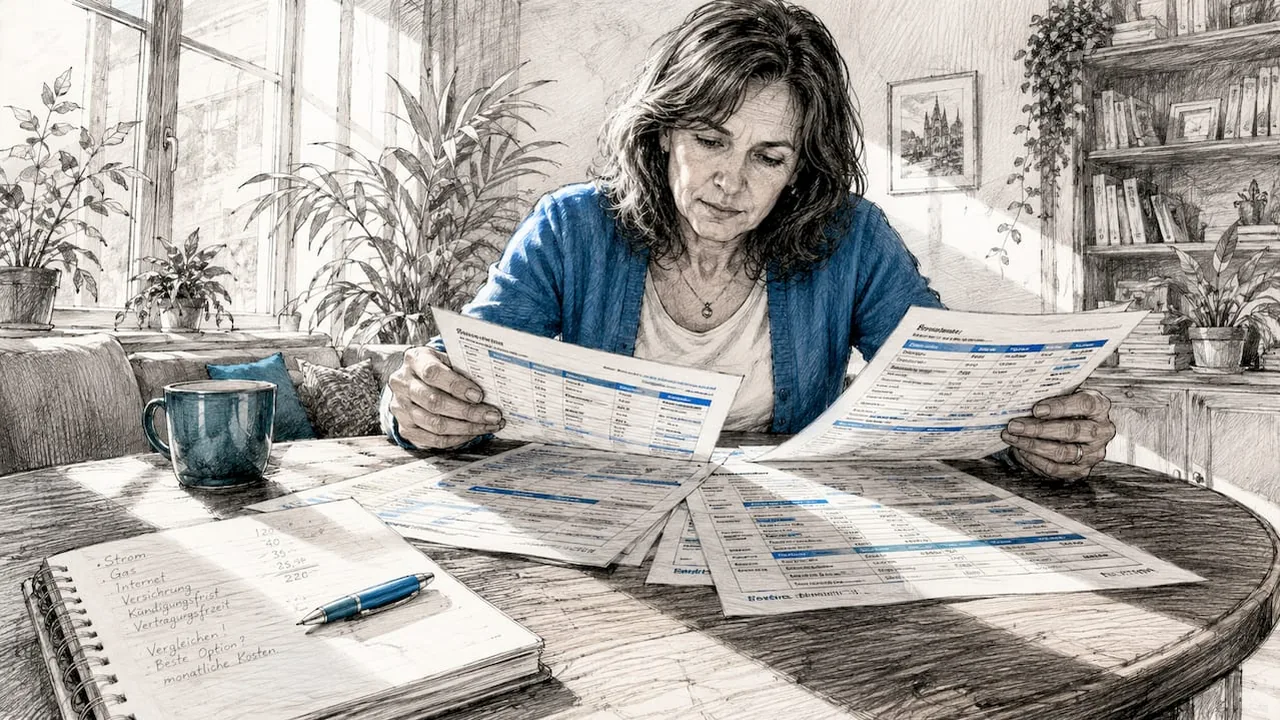
Example values for illustration. Your concrete comparison is done with the electricity comparison.
Compare electricity tariffs for your consumption
Enter your annual consumption and postcode and compare free and without obligation. You will see at once which tariff type and which provider suit your consumption profile and your region.
Independent, free comparison. meinetarife24 is financed through provider commissions, at no extra cost to you.
Which electricity tariff suits whom?
The right tariff type depends less on chance than on your situation: consumption, heating technology and whether you charge an electric car. This overview maps the six tariff types to typical households.
Single household (approx. 1,500 kWh)
At low consumption a low base price matters more than a low unit price. A cheap special tariff with a short term is usually the best choice.
Family (3,500 to 4,500 kWh)
High consumption makes the unit price the decisive lever. A fixed-price special tariff with a price guarantee also protects against price jumps.
Household with a heat pump
A separate heating-power tariff or a dynamic tariff uses the reduced grid fees for controllable loads and lowers heating costs.
Household with an electric car
EV power or a dynamic tariff pays off if you can shift charging into cheap night or low-price hours.
Environmentally conscious household
A green electricity tariff with a recognised label (Grüner Strom-Label or OK-power) demonstrably supports new renewable installations.
Newcomer or expat
After moving you land automatically in the expensive basic supply. The most important step is switching to a suitable special tariff.
Remember: there is no single best electricity tariff, only the one that suits your consumption profile. That is exactly why a comparison always calculates with your real annual consumption and postcode instead of recommending a tariff across the board.
Dynamic tariffs and genuine green power
Two tariff types often cause confusion: the dynamic tariff and the green electricity tariff. Both sound modern but only work as promised under certain conditions.
When a dynamic tariff pays off
What makes green power genuine
The word green alone says little. What matters is the quality label. Three are mainly recognised:
What to watch for: some tariffs market themselves as "green" but only buy guarantees of origin from existing hydropower plants abroad. That is legal but supports no new installations. Whoever really wants to help the energy transition chooses a tariff with a strict quality label. More on this in the green electricity comparison.
From knowledge to the right tariff
Once you know the tariff types, the rest is easy. You only need your annual consumption from the last bill and your postcode. With that you find out in a few minutes which tariff type and which provider suit you. You sign the new contract before cancelling the old one, the new provider handles the cancellation, and supply continues without interruption.
Good to know: since 6 June 2025 the technical switch of the electricity provider must be possible within 24 hours. This rule applies to electricity only, not to gas. The full process is described in the electricity comparison guide.
For expats and newcomers
If you have just moved to Germany, you almost always land automatically in basic supply, usually the most expensive tariff. Terms like unit price, base price, dynamic tariff or heating power are hard to place without prior knowledge. The good news: once you understand the six tariff types and how unit price and base price interact, you make far better decisions.
meinetarife24 explains these topics in German, English and Turkish so you can make an informed decision, even if German is not your native language. How to register as a newcomer is shown in the guide to setting up electricity for expats.
Frequently asked questions
Related articles
Electricity comparison 2026
Compare electricity tariffs for your consumption and find the tariff that fits.
Dynamic electricity tariff
How exchange-linked tariffs work and who they really pay off for.
Compare green electricity
Quality labels, real climate benefit and the cheapest green tariffs at a glance.
Set up electricity for expats
How to register correctly after moving and avoid the basic-supply trap.
Find the right electricity tariff
You now know the types of electricity tariff. Compare free and without obligation and find the tariff that fits your consumption.
Free · Independent · SSL-encrypted